Published on: Community Newspapers
Click Here to View the Original Article
There are currently 6,100 homeless students within the Miami-Dade County Public Schools system.
These children, even those living in emergency housing, start the school year without basic “back-to-school” supplies. Essential supplies are simple things; a backpack, the right uniform, calculators and notebooks. Yet these items will remain out of reach for Miami-Dade’s homeless children unless the community rallies to help.
The back to school initiative launched by Chapman Partnership,the private sector partner of the Miami-Dade County Homeless Trust,makes it easy for the community to support and help ensure no child is left without school supplies on day one and throughout the year.
The initiatives invites Miami-Dade County residents to log onto: https://chapmanpartnership.org/backtoschool, and make donations to fund the purchase and distribution of school supplies to homeless school-age children residing at Chapman Partnership. Chapman Partnership provides the children at the centers with new school uniforms, undergarments, sneakers and backpacks with school supplies throughout the school year.
“We are dedicated to providing our children with everything they need while they are in school to become successful,” said H. Daniel Vincent, President and CEO of Chapman Partnership.
Terrence, a former resident of Chapman Partnership, is a shining example of how important these supplies are for a student’s well-being and academic success.
In October, Terrence, 19, argued with his stepfather over a malfunctioning refrigerator and ended up homeless. He couch surfed with friends for a few weeks and dedicated himself to school. “School was my home,” said Terrence. “While I knew I was faced with homelessness, school was the only thing that I looked forward to.” He was determined to graduate.
It wasn’t long before Terrence found some relief with the help of Miami-Dade County Public Schools Project UP-START, a program that seeks to ensure a successful educational experience for homeless children and youth in South Florida, which placed him at Chapman Partnership.
Terrence became one of the 5,000 men, women and children that Chapman Partnership serves annually. Chapman Partnership provided him with housing, food, clothing, unwavering support, and, most importantly, all the school supplies he needed to succeed and graduate from high school.
“Terrence is an exceptional young man, who with the support from the community, has overcome homelessness. We knew he would have a bright future and we are proud to call Terrence an ambassador for the children in our Family Resource Centers,” stated Daniel Vincent, President and CEO of Chapman Partnership.
On June 8, Terrence graduated from Miami Jackson High School with a 3.3 grade point average and moved out of Chapman Partnership and into the dorms at Florida International University, he received a full scholarship, including housing.
“Terrence has just taken two giant leaps forward—he graduated from high school and he has begun his college career in spite many obstacles. Now we must focus on other young students who have the opportunity to follow Terrence’s lead, pursuing an educational path to the future that they desire,” said Schools Superintendent Alberto M. Carvalho. “The Chapman Partnership and Miami-Dade County Public Schools will continue to work together in order to nurture and support these youngsters to succeed in school and beyond, ” stated Superintendent of Miami-Dade County Public Schools.
Terrence is a direct beneficiary of the back to school initiative and credits Chapman Partnership for helping him achieve his goals. “Chapman Partnership taught me that there is help and that while each individual faces different challenges, you should accept and embrace the programs and services at the center,” said Terrence.
Every child deserves to be school ready on day one, especially our community’s homeless children. To support the back to school drive, log onto: https://chapmanpartnership.org/backtoschool.
By Ashley Jones
Click Here to Read the Full Article
 Published on: Community Newspapers
By Linda Rodriguez Bernfeld
Click Here to View the Original Article
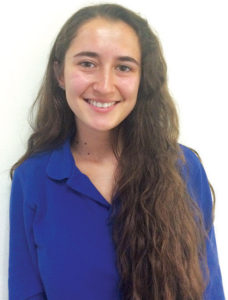
Gulliver Prep senior Marietta La Barbera is president of Growing Together, a special youth group for the Chapman Partnership for the Homeless.
“We are responsible in raising money for the kids who live there,” she says. “We go once a month and set up events. We plan play activities for the kids only. We’ll have movie nights and arts and crafts. We decorate an entire Christmas trees with decorations that they made and their pictures on the tree.”
She’s been in the organization for three years.
“One of my really good friends started this,” she says. “I brought in the rest of the club. She was older and she graduated. I came in and took over.”
The students in Growing Together help children from babies to 17.
“A lot of the kids, over five years old, they go to public schools,” La Barbera says. “A lot of people don’t know this side of them. I’ve kind of became obsessed with it.”
She helps the children with tutoring.
“They have teachers on site,” she says. “I’ll go there and help them with their math homework. The room will be half full of babies coloring and then some of us trying to help the older kids do well in school.”
She says the Chapman Partnership helps get people on their feet by providing social workers and other services to help them.
“For the kids that have grown up in situations like that, it’s hard for them to think that they can be better,” she says. “Some kids could be doing better, but they don’t see the point. They see their parents working hard, but this is all that they have seen.”
While running the group is a lot of work, it’s something that she felt compelled to do.
“I’ve always gotten involved with the community,” she says. “My family and I go to church services and feed the homeless.”
La Barbera has tapped some friends to continue the organization after she graduates.
“Our whole goal is to have money at the end of the month to donate to the children,” she says.
While a lot of students engage in community service so they can put it on their college applications, La Barbera says this project is something that is important to her and helping the children consumes her.
Running the organization has taught her responsibility.
“I do have a boss who works at Chapman,” she says. “All the work falls on me. At first it was stressful. Now I feel like I can handle the real world. When I go to college I want to go somewhere I can work like that with the children.”
At Gulliver, La Barbera is involved in the Environmental Club. The group worked on a successful petition to recycle plates.
“Now instead of Styrofoam we have recyclable cup and plates,” she says.
They try to reduce the use of electricity at school.
“This is another thing I’ve become passionate about,” she says. “I have a designated recycle trash can, once I week I go and separate the recyclables from the trash. If not, it would all go to the same place.”
She’s been in Model United Nations for two years and is co-president this year. La Barbera applied to Boston University, Northeastern and Tulane for a major in International Politics and maybe a law degree.
“My goal is to something with United Nations,” she says. “I want to do something with changing the world.”
Linda Rodriguez Bernfeld
Published on: Miami Herald
By Elizabeth Koh
Click Here to View the Original Article
Anthony Lopez has been to only one Miami Heat game, before he was old enough to remember it. But since then, he has been a devoted and enduring fan. When he and his family moved to the Chapman Partnership, a Miami homeless shelter, after their home in Tampa was robbed, it seemed like a setback for the family’s holiday cheer.
But the chubby-cheeked 8-year-old got an early holiday wish granted Wednesday night: Chris Bosh was going to serve him dinner.
“I can’t wait to see my favorite basketball player. The Heat’s my favorite team,” he said breathlessly.
The Wednesday night dinner marked the fourth time that Bosh and his wife, Adrienne, have volunteered to serve food for the Thanksgiving holiday at the Miami shelter, which serves 800,000 meals a year. The organization, which also runs a shelter in Homestead, regularly invites community organizations to help those in need, said marketing manager Alec Rosen.
But the Boshes’ visit, he said, was something special.
“They’re very good people,” Rosen said.
The cafeteria where Anthony and his family usually eat was festooned with orange, yellow and brown balloons on Wednesday; the plastic tables covered in festive leaf-printed tablecloths. Anthony, marching in on his red sneakers, marveled at the decorations, poking at one turkey-shaped balloon above his head.
“I wish LeBron James were here, too,” he said. “But he doesn’t play in Miami anymore.”
Anthony settled into a seat at the far corner table, fidgeting. Members of Team Tomorrow Inc., a charity founded by Chris Bosh, and the girls’ basketball team from Miramar High School began handing out dinners on trays, piled high with BBQ chicken, cornbread, baked beans and salad.
When their food arrived, his sister Alysa, 9, stole his fork, and so Anthony began devouring his piece of chicken by stabbing it with his plastic knife instead.
Then a tall head ducked in under the threshold.
Before Bosh had taken 10 steps into the room, Anthony leaped from his seat and ran up to the 6’11” basketball star, who was carrying a tray of cupcakes. Even on tiptoes, he barely reached Bosh’s waist.
“Can I have one?” he asked.
Bosh carefully plucked out a chocolate cupcake with white icing, then bent down to hand it to Anthony. He bit into it quickly, hovering around the athlete as he slowly made his way down the aisle. A dozen children thronged Bosh as he moved, with orbiting parents digging out their phones to snap pictures of the moment.
Anthony, after devouring his cupcake, ran back up to the Heat forward.
“Can I have another?”
“Another?” Bosh asked. Anthony nodded.
The athlete shook his head, but pulled out another cupcake and bent down. “Don’t tell anyone,” he whispered, patting Anthony on the head.
Anthony beamed.
After handing out sweets, Bosh and his wife walked back to the kitchen to don hair caps and aprons before serving food.
Bosh said he and Adrienne chose to volunteer at Chapman because of its location in inner-city Miami and the shelter’s dedication to children.
“No matter what difficult times they are going through, they have so much joy,” Adrienne Bosh said.
Chris Bosh joked that he enjoyed hearing kids’ comments about his height and questions about his teammates. “They say the darnedest things,” he said.
After the dinner, staff members gathered the children outside the center’s recreation room. Inside, the walls were plastered with action shots of Heat players on the court, the tables stacked with coloring books, and the Boshes handed out small plush toys to the children playing on the computers and Wii console.
But standing outside, Anthony was almost bashful after his brush with fame.
“I’m just really glad I got to meet him,” the child said. “Really glad.”
Published on: Key Biscayne Magazine
Text by: Extrellita S. Sibila
Click Here to View the Original Article
Anyone who has met Carlos Fernandez-Guzman will tell you that he commands a room with a superb ability to make people feel valued, appreciated and heard. As the leader of the team at Pacific National Bank, making every one of his co-workers feel like they make a difference - personally, professionally and as members of the community - is one of his top goals.
And he most certainly practices what he preaches. CFG, as his friends call him, is the volunteer Chair of the Executive Committee Et Board of Trustees for Chapman Partnership, a homeless assistance agency with a "lifetime to date" success rate of 64% for transitioning the homeless to housing.
"Our goal is for our residents to have the skills and income to live independently from the first day of departure," he says. This process starts when the resident enters one of Chapman Partnership's two Homeless Assistance Centers. They are assigned a case manager who helps create an action plan that includes a range of services from job training and placement to obtaining eligible benefits, childcare and healthcare assessment. Their Employment Specialist facilitates the missing elements in the job search including interview clothes, bus passes and certification fees. They also connect residents to agencies that help with securing proper ID, social security numbers and work permits.
Each year, they place hundreds of work-ready adults into full-time jobs and help stabilize the family units. The next step is finding suitable and affordable housing and assisting residents with everything from applications, utility and security deposits to providing needed furniture, household goods and move-in supplies. The average length of stay at the Homeless Assistance Center is approximately 70 days for individuals and 100 days for families.
On moving day, the resident or family is relocated into their new place where all their household items - from pots and pans to furniture, linens and art - are sourced from Chapman Partnership's warehouse and provided free of charge. "Not a day goes by since becoming involved in Chapman Partnership that I don't think of my mother, a young woman arriving in Miami by herself with a 9-year-old child without a penny to her name - she had no family, no prospects for employment, and only the promise of a friend's couch to sleep on for the next 60-90 days," shares Fernandez-Guzman. "It's incumbent on me, and others like me, to make things better for those who may be going through similar life experiences."
The nobleness of the cause, the purity of the mission and the challenges faced by the people they serve are all reasons Fernandez-Guzman is passionate about the cause. "Together with The Miami-Dade County Homeless Trust and other members of the continuum of care, the unsheltered homeless population of Miami-Dade County has decreased from approximately 8,000 in the early and mid-90's to approximately 1,000 today," he says. "With that said, we cannot rest until we eradicate homelessness in our community."
Published on: Miami Herald
Click Here to View the Original Article
When civic leaders note the number of homeless on the streets of Miami has dropped from 8,000 to 1,000, the talk often shifts to the help offered through the years.
And much of that help has come through the Chapman Partnership, founded by the late publishing executive Alvah Chapman.
The nonprofit, which serves the homeless by providing housing, services for children and job placement, celebrated its 20th anniversary on Saturday with a gala at the JW Marriott Marquis in downtown Miami.
Chapman has helped more than 100,000 homeless, including 20,000 children, since 1995. With a 64 percent success rate, the organization has placed many people in permanent residences or transitional housing — four times the national average.
The organization believes the key to solving homelessness lies in empowering people with ways to become self-sufficient and contributing members of society through stable jobs and affordable housing.
“We provide more than just a bed and a meal,” said Alec Rosen, a spokesman for Chapman. “The empowerment comes with giving the residents the proper care, tools and training, so they become self-sufficient in their life.”
Chapman provides residents with a medical and dental clinic, a psychiatrist and a case manager to help people succeed.
Desmond Meade, a former resident at Chapman, understands the importance of these tools because they helped him get off the streets and into law school.
“My time in Chapman played a significant role in what I am doing now,” said Meade, 48, a graduate of Florida International University’s College of Law. “That was the first place where I was able to go to get my mind right, properties in order and then understanding the grand scheme of things.”
Meade, who lived on the streets in his late 20s, believed that nobody cared about him and the other homeless, but he soon found out that isn’t always the case.
“There’s a great deal of people out there that do care about the homeless and are taking steps to address those issues,” he said.
“Knowing that there are people out there, like Chapman Partnership, that care about humanity as a whole serves as a source of inspiration and motivation.”
Published on: FIU Sports
Click Here to View the Original Article
MIAMI (Oct. 7, 2015) – Members of the FIU football team took time out of their schedule to visit the Chapman Partnerships' downtown Miami facility on Monday, Oct. 5.
Alex McGough, Shawn Abrams, Cody Hodgens, Anthony Wint, Sam Medlock, Trey Anderson, Neal Mars, Richard Leonard and Adrien Francois spent time on Monday serving food to the less fortunate.
Chapman Partnership operates two Homeless Assistance Centers with 800 beds located in Miami and Homestead. Collectively these two Centers serve approximately 5,000 men, women and families with children annually. They help the homeless by providing a comprehensive support program that includes emergency housing, meals, health, dental and psychiatric care, day care, job training, job placement and assistance with securing stable housing. The average length of stay for single adults is 89 days and families with children 133 days.
Since 1995, Chapman Partnership has had more than 100,000 admissions including 20,000 children in Miami-Dade County and a 64% success rate of moving people who complete the program from homelessness to self-sufficiency.
The Chapman Partnership's mission is to provide comprehensive services to empower homeless residents to become self-sufficient.
###
For the latest information on Panthers football, follow us on Twitter, @FIUFootball, and check out Pete Pelegrin's in-depth coverage of FIU Athletics on his official blog, The Prowl, at www.FIUSports.com.
#####
About FIU Athletics: FIU Athletics is home to more than 400 student-athletes in 18 different sports. Athletic events are played in seven different venues on FIU's campuses (Modesto A. Maidique and Biscayne Bay), including FIU Arena and Ocean Bank Field at FIU Stadium.
About FIU: Florida International University is recognized as a Carnegie engaged university. It is a public research university with colleges and schools that offer more than 180 bachelor's, master's and doctoral programs in fields such as engineering, international relations, architecture, law and medicine. As one of South Florida's anchor institutions, FIU contributes $8.9 billion each year to the local economy. FIU is Worlds Ahead in finding solutions to the most challenging problems of our time. FIU emphasizes research as a major component of its mission. FIU has awarded over 200,000 degrees and enrolls more than 54,000 students in two campuses and three centers including FIU Downtown on Brickell, FIU@I-75, and the Miami Beach Urban Studios. FIU also supports artistic and cultural engagement through its three museums: the Patricia & Phillip Frost Art Museum, the Wolfsonian-FIU, and the Jewish Museum of Florida-FIU. FIU is a member of Conference USA and has over 400 student-athletes participating in 18 sports. For more information about FIU, visit http://www.fiu.edu/.
Chapman Partnership operates two homeless assistance centers, one in Downtown Miami and the other in Homestead, with a total of 800 beds. Our model since 1995 has been to provide holistic case-managed services to empower the homeless to lead independent lives.
During tropical weather emergency in South Florida, when Miami Dade County is under Tropical Storm / Hurricane Advisory or Watch, Chapman Partnership provides an additional 101 emergency beds to the homeless. Chapman Partnership provides these tropical weather emergency intakes with screening for medical needs, a safe/secure place to stay, supervision, meals and an emergency bed.
Any tropical weather emergency intakes wishing to stay are referred to Miami outreach team for placement.
Since opening, Chapman Partnership has admitted more than 100,000 homeless men, women and children and has achieved a success rate of 64% - 4 times the national average.
Chapman Partnership is the proud private-sector partner of the Miami Dade County Homeless Trust.
Contact: Alec Rosen
Cell: 305-877-4760
Published on: Miami Herald
Click Here to View the Original Article
The approach of school brings some challenging math to the Lotus House shelter for homeless women. The problem to be solved: buying enough uniforms to make sure the 50 students living there will have clean clothes throughout the school year.
Homeless children usually receive two free uniforms from the school system, but Lotus tries for double that, given the challenge its residents have in keeping school clothes clean. Inside the cluster of former apartment buildings in Overtown, two women often share a modest bedroom while their children bunk in plastic beds in the family room.
“You have community washing rooms. And there could be a mom with three kids,” said Constance Collins, president and founder of the nonprofit organization. “She’s not going to have time to wash every night. If you get one or two uniforms, that doesn’t really work.”
A new school year strains budgets throughout Miami-Dade, where one in five households lives in poverty. But Miami-Dade homeless shelters face unique challenges as they wrap up another back-to-school drill with more than 900 children as residents.
Efforts to send a child to his or her original school far from a shelter can be complicated by long county bus rides for children who may too young to be on their own. Families living in hotels as they await a slot in a backlogged shelter system face even more obstacles in providing their children with clean uniforms and a quiet place for homework.
Backpack drives generally bring shelters a surplus of supplies by September, but most donors overlook the socks, underwear and other must-haves for parents of growing children. Shoes tend to be the most expensive item on the shelters’ lists, but also one of the most important.
“For back-to-school, kids don’t want hand-me-down shoes,” said Elizabeth Von Werne, vice president of program services at Chapman Partnership, the leading recipient of Miami-Dade’s homeless-aid dollars. “Everyone else is walking back into school with brand-new shoes. They want to fit in.”
The latest homeless count in January showed 934 homeless people below the age of 18 in Miami-Dade’s homeless-shelter network. That’s roughly 35 percent of the county’s total count of 4,152 homeless people identified in the survey.
The board that oversees the county restaurant tax that funds homeless programs gives priority to families, meaning none should be left on the street once they call the county hot line. But with shelters clogged with waiting lists, a large number of families end up living in cheap hotels and motels while they await an opening in a shelter. The January count showed 1,400 homeless adults and children housed in hotels and motels.
Homeless children are such a presence in Miami-Dade that the school system has an office dedicated to that subset of students. Called Project Upstart, it counted nearly 2,900 homeless students that qualified in March. Of those, 675 lived in shelters and 183 in hotels. Under the category “cars and parks, etc.,” Upstart’s count listed 117 students.
“Every year, our numbers go up. And we know we’re not capturing all of them,” said Raquel Regalado, a school board member and candidate for Miami-Dade mayor. “Drive up to any Walmart at night and look at the parking lot. You will see families living in their cars.”
While the federal government considers a child homeless if he or she has no place but a shelter to live, the school system also includes families staying with friends and relatives. Known as “doubling up,” it can have a family living on the verge of homelessness as they bounce from host to host.
“I spoke to a woman the other day who told me over the phone she was homeless. Yet she was with her sister,” said Bobbie Ibarra, director of the Miami Coalition for the Homeless. “There were too many people in the home, and her sister gave her a definitive time [to leave]. She had issues with her children.”
Project Upstart solicits donations and grants for the free uniforms that Lotus and other shelters rely on each year. It purchases prom tickets and dresses for homeless high school students and manages a free store of donated items reserved for homeless families.
“Those donors from Miami Beach, my goodness. There’s Chanel. There’s Gucci. There’s Jimmy Choo. Students can come and take what they want,” said Debra Albo-Steiger, head of Project Upstart. “I don’t want a homeless student to stand out.”
One of the program’s most complicated tasks is arranging transportation for homeless students. Federal law requires school systems to try to keep children in their original neighborhood school, rather than whichever school is closest to the shelter or hotel room where they’re being housed. When a school bus route can’t deliver the child, Miami-Dade schools provides free passes to the county transit system.
For younger children, the school system provides two passes: one for the student and one for the parent. Case workers said some middle schoolers can navigate the county transit system fine on their way to a home school, leaving a parent free to head for work. More often, the longer trip back to a familiar school is deemed too daunting.
“It’s a tough call,” Von Werne said. “Maybe mom has to get to work. But she’s also not comfortable sending a child across town on a county bus.”
Chapman runs a shelter in Miami and one in Homestead, and combined they house about 115 school-age children. Only 16 are in high school. Another 76 live in hotels and motels while awaiting a slot in a Chapman facility. The back-to-school season can be trying even once families leave Chapman for something more permanent.
Nadege Cius, 31, moved into Chapman’s Miami facility from Palm Beach County a few weeks ago. A married mother of six, Cius faced a daunting back-to-school list. Two of her children have special needs (autism and a speech impediment). Her 13-year-old daughter wasn’t thrilled with leaving her friends back in Palm Beach County, where they lived before being evicted amid a cash squeeze.
At Chapman’s Miami compound, the family lives steps from a wing of services that include a health center, housing counselors and job-placement aides. A case worker arranged school tours for Cius and meetings with school counselors specializing in the special-needs programs her two sons will utilize once classes begin Monday. Each year, a local barbershop offers free back-to-school haircuts.
“Thank God for Chapman,” Cius said. With her children getting ready for school, Cius said she’s focusing on three things this fall. “I have to fix my credit. I have to go back to school. And I have to make sure my kids are happy.”
Chapman’s in-house daycare and youth program already has her daughter meeting new classmates. Workers there greet school buses each day to guide the children to the shelter’s after-school program. Thursday was the big back-to-school event, where students received their uniforms and backpacks with crayons, markers, pencils, notebooks and other back-to-school staples.
“Mechanical pencils — they’re the thing now,” said Nichole Burke, an assistant teacher at the program, called the Family Resource Center. “And highlighters. They love highlighters.”
Burke said all of the supplies were donated, part of Chapman’s back-to-school drive. Like Thanksgiving and Christmas, the start of school marks a high point for fundraising at shelters. Case workers count on a surplus from August to carry them through the year, as they face a string of new arrivals in the fall, winter and spring — often with children attending a new school and needing a full set of supplies and uniforms.
Even with the logistical challenges, a new school year also eases some of the strain in homeless shelters. Parents have more time for work or to meet with social workers and potential employers. School also means a return to the mainstream for homeless children.
“When you watch that child step onto a school bus, you know that life has normalized,” said Collins, who founded Lotus House in 2004. “They’re like every other child. It’s a beautiful thing.”
Published On: Miami Herald
Homelessness is currently a hot topic in Miami-Dade as the city of Miami and the county’s Homeless Trust heatedly squabble over the best way to deal with hardcore cases downtown.
But there’s a segment of that population that often gets overlooked in the headlines: children — and they should not be.
The truth is that children are the fastest growing segment of the local homeless community, said Alec Rosen, spokesman for Chapman Partnership, the trust’s private sector partner that runs two large family-friendly homeless shelters in Miami-Dade.
On any given night, according to the nonprofit, there are about 250 children sleeping in their shelters in Miami and Homestead with their homeless parents.
How they ended up in such a dire situation is often a family tragedy that starts with the parents falling on financial hard times due to low wages or a financial blow, like an illness or an expensive car repair, missing the rent payment a couple of months and then free-falling into homelessness. It can happen that fast.
A typical story has the family at first getting by in the streets or living inside a car. They don’t always seek help for fear of having the children taken away. Domestic violence, a parent’s mental illness or substance abuse can also land a family in the street. In any case, the children suffer the collateral damage of their parents’ misfortune.
And in recent months, there has been a spike in the number of children ending up in homeless shelters, Mr. Rosen told the Editorial Board. Currently, 44 percent of all clients at Chapman Partnership are families with children. “We are housing minors of all ages — from newborns to teenagers.”
For the children that have found refuge at Chapman Partnership a crucial time approaches. As the new public school year is about to begin, Chapman Partnership is aggressively trying to attract attention — via a new initiative and a public video campaign — to the plight of these faceless, homeless kids.
The center wants to make their return to school in August just like that of any other child — a noble effort the community should support.
The idea is to make any possible visible signs of homelessness invisible so the kids don’t have to deal with any stigma.
The center wants to create a level playing field in the classroom for these children. No one should be able to tell that the public school bus is picking them up and dropping them off at a homeless shelter. “We look like a large apartment complex for that very reason,” Mr. Rosen said of the Miami shelter.
Chapman, which has a $15 million annual budget and receives about 60 percent of it from the Homeless Trust — about $9 million — depends on fund-raising for the rest. And here’s where the community steps in to help.
“We are trying to send them to school with brand new uniforms, bookbags and shoes, and we need help,” Mr. Rosen said.
Joining the campaign in earnest this year is Miami-Dade School Superintendent Alberto Carvalho. “These are often fragile children who need to be loved and taught, so education and support is the key to their success,” he said. Chapman and the superintendent have recorded a video plea asking the community to help finance the purchase of the uniforms, shoes and school supplies.
It’s a worthy cause. As a community, we should not look away from these homeless kids.
To help, go to https://chapmanpartnership.org/backtoschool


*Impact numbers are updated at the beginning of each fiscal year and will be updated annually.
As the private sector partner of the Miami-Dade County Homeless Trust, Chapman Partnership is another step in the continuum of care. Any person or family who is homeless, about to be homeless, or assisting someone facing homelessness, and requiring emergency assistance must first contact the Homeless Helpline administered by the Miami-Dade County Homeless Trust. Homeless Helpline Toll Free Number: 1-877-994-HELP (4357).